Essays & Articles

Engineers and business executives are good at solving problems, but they seldom ask if it is the correct problem.
Human- and humanity-centered designers are trained to address the core, underlying factors, not just the symptoms.

Design must change from being unintentionally destructive to being intentionally constructive
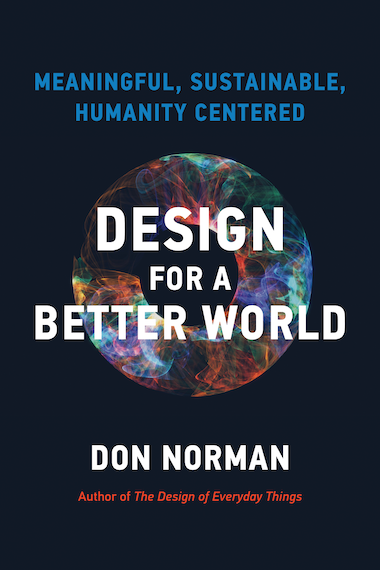
From "Design for a Better World." last paragraph of Chapter 2 (page 13).
Failures? No — Learning Experiences
We scientists (and designers) learn from our failures. In fact, scientists seldom fail. Instead, they say “that didn’t work. Time to try something new.” I prefer never to talk of failure. Instead, I say “that...
Don Norman
Simplicity is in the mind, complexity is in the world.
If you understand something, then even things that are complex become simple. The complexity of the product must match the complexity of the task.
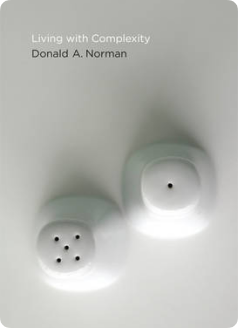
Don Norman in the book "Living with Complexity."
I learn more by being wrong than by being right
When people praise my ideas it is nice to hear, but I don’t learn anything. If people disagree, I learn. If they convince me, I am thankful and I change. If I believe I was...
Don Norman
If you can think of a clever solution in a few hours, assume many others have already done so
If you can think of a clever new concept or solution to an existing problem in a few minutes or hours, then you should recognize that many people all over the world, many who have...
Don Norman
Make it Simple? No! Make it Understandable.
Make it Simple? No! Make it Understandable. When people make things "simple" by minimizing controls, they make it much more difficult to work or to understand.
Simplicity is in the mind, Complexity is in the world. Why? Things you understand are simple.
It is the designer’s job to take complex requirements and make them so understandable and appropriate that they are pronounced “simple.”
Don Norman
The universe is made of stories, not atoms
A quote from the poet Muriel Rukeyzer’s book “The speed of darkness.” Why stories? Because they combine history and context, critical events and results, both good and bad, expected and unexpected all linked through causal...
Don Norman
You are being too logical, I often tell engineers and executives.
“You are being too logical,” I explain. “People are not logical. Logic is artificial. It was invented by mathematicians and philosophers. It is not how people think, which is why it is so difficult for...
Design for people the way they are, not for how you want them to be.
Waiting: A Necessary Part of Life
DesignInteraction design is about interfaces, which means it is about synchronizing the events of different systems, about memories, buffers, queues and waiting rooms. Waiting is an unavoidable component of interfaces, an unavoidable part of life. Just as dirt collects in crevices,...
November 17, 2008
6 minutes read
Design as Practiced
DesignDesign as practiced is considerably different from design as idealized in academic discussions of "good design." Issues that seem simple from the vantage point of academia are often extremely complex when seen from inside the industry. Indeed, the two sides seem hardly to be speaking the same lan...
November 17, 2008
24 minutes read
Workarounds – Leading Edge of Innovation
DesignWhere do new ideas come from? How should designers create, transform, innovate? Do we need formal observational methods? When I talk to today’s foremost designers, most are scornful. Great designers are like great novelists: acute observers of human beha...
November 17, 2008
7 minutes read
Sociable Design – Introduction
DesignThis is an abstract for the attached PDF file, "Sociable Design". Whether designing the rooftop of a building or the rear end of a home or business appliance, sociable design considers how the design will impact everyone: not just the one, intended person standing in front, but also all the rest...
November 17, 2008
3 minutes read
Engineers and business executives are good at solving problems, but they seldom ask if it is the correct problem.
Human- and humanity-centered designers are trained to address the core, underlying factors, not just the symptoms.
Design must change from being unintentionally destructive to being intentionally constructive
From "Design for a Better World." last paragraph of Chapter 2 (page 13).
Failures? No — Learning Experiences
We scientists (and designers) learn from our failures. In fact, scientists seldom fail. Instead, they say “that didn’t work. Time to try something new.” I prefer never to talk of failure. Instead, I say “that...
Don Norman
Simplicity is in the mind, complexity is in the world.
If you understand something, then even things that are complex become simple. The complexity of the product must match the complexity of the task.
Don Norman in the book "Living with Complexity."
I learn more by being wrong than by being right
When people praise my ideas it is nice to hear, but I don’t learn anything. If people disagree, I learn. If they convince me, I am thankful and I change. If I believe I was...
Don Norman
If you can think of a clever solution in a few hours, assume many others have already done so
If you can think of a clever new concept or solution to an existing problem in a few minutes or hours, then you should recognize that many people all over the world, many who have...
Don Norman
Make it Simple? No! Make it Understandable.
Make it Simple? No! Make it Understandable. When people make things "simple" by minimizing controls, they make it much more difficult to work or to understand.
Simplicity is in the mind, Complexity is in the world. Why? Things you understand are simple.
It is the designer’s job to take complex requirements and make them so understandable and appropriate that they are pronounced “simple.”
Don Norman
The universe is made of stories, not atoms
A quote from the poet Muriel Rukeyzer’s book “The speed of darkness.” Why stories? Because they combine history and context, critical events and results, both good and bad, expected and unexpected all linked through causal...
Don Norman
You are being too logical, I often tell engineers and executives.
“You are being too logical,” I explain. “People are not logical. Logic is artificial. It was invented by mathematicians and philosophers. It is not how people think, which is why it is so difficult for...
Design for people the way they are, not for how you want them to be.
Simplicity Is Not the Answer
DesignEveryone wants simplicity. Everyone misses the point. Simplicity is not the goal. We do not wish to give up the power and flexibility of our technologies. We are faced with an apparent paradox, but don’t worry: good design will see us through. People want the extra powe...
November 17, 2008
6 minutes read
Design as Communication
DesignI have changed my mind: good designers communicate directly with their users through the appropriate placement of visible clues, hints, and yes, affordances. Once we start to view design as a form of communication between designer and the user, we see that perceived affordances become an importan...
November 17, 2008
14 minutes read
Filling Much Needed Holes
DesignMany of our clever ethnographic and field methods are designed to find unmet needs. You know what? Most are far better off if they stay unmet....
November 17, 2008
5 minutes read
The Psychology of Waiting Lines
DesignThis article contains pointers to my MIT Sloan Management Review paper on waiting lines as well as a PDF of to the earlier paper in which I discussed the same issues in more depth than SMR permitted. The PDF file, "The Psychology of Waiting Lines." argues that although waiting is an ines...
November 17, 2008
3 minutes read
CNN Designers challenged to include disabled
DesignI'm on a campaign to make assistive devices aesthetically delightful -- without impairing effectiveness and cost. Why are things such as canes, wheelchairs so ugly? I urge the skilled industrial designers of this world to revolutionize this arena. Perhaps the Industrial Design Society of America ...
November 17, 2008
4 minutes read
Affordances and Design
DesignIn the world of design, the term "affordance" has taken on a life far beyond the original meaning. It might help if we return to the original definition. Let me try to clarify the definition of the term and its many uses....
November 17, 2008
8 minutes read
You may also like books
books