Essays & Articles

Engineers and business executives are good at solving problems, but they seldom ask if it is the correct problem.
Human- and humanity-centered designers are trained to address the core, underlying factors, not just the symptoms.

Design must change from being unintentionally destructive to being intentionally constructive
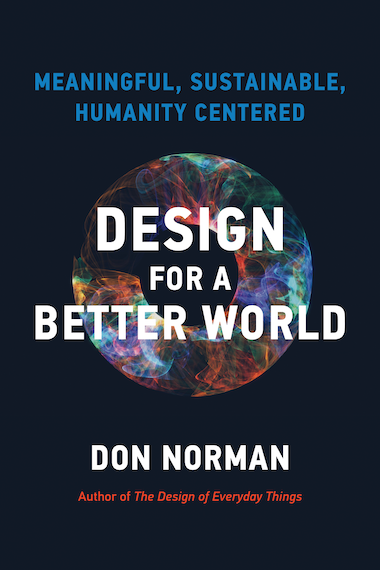
From "Design for a Better World." last paragraph of Chapter 2 (page 13).
Failures? No — Learning Experiences
We scientists (and designers) learn from our failures. In fact, scientists seldom fail. Instead, they say “that didn’t work. Time to try something new.” I prefer never to talk of failure. Instead, I say “that...
Don Norman
Simplicity is in the mind, complexity is in the world.
If you understand something, then even things that are complex become simple. The complexity of the product must match the complexity of the task.
Don Norman in the book "Living with Complexity."
I learn more by being wrong than by being right
When people praise my ideas it is nice to hear, but I don’t learn anything. If people disagree, I learn. If they convince me, I am thankful and I change. If I believe I was...
Don Norman
If you can think of a clever solution in a few hours, assume many others have already done so
If you can think of a clever new concept or solution to an existing problem in a few minutes or hours, then you should recognize that many people all over the world, many who have...
Don Norman
Make it Simple? No! Make it Understandable.
Make it Simple? No! Make it Understandable. When people make things "simple" by minimizing controls, they make it much more difficult to work or to understand.
Simplicity is in the mind, Complexity is in the world. Why? Things you understand are simple.
It is the designer’s job to take complex requirements and make them so understandable and appropriate that they are pronounced “simple.”
Don Norman
The universe is made of stories, not atoms
A quote from the poet Muriel Rukeyzer’s book “The speed of darkness.” Why stories? Because they combine history and context, critical events and results, both good and bad, expected and unexpected all linked through causal...
Don Norman
You are being too logical, I often tell engineers and executives.
“You are being too logical,” I explain. “People are not logical. Logic is artificial. It was invented by mathematicians and philosophers. It is not how people think, which is why it is so difficult for...
Design for people the way they are, not for how you want them to be.
Design Education: Brilliance Without Substance
Core77We are now in the 21st century, but design curricula seem stuck in the mid 20th century. In the 21st century, design has broadened to include interaction and experience, services and strategies. The technologies are more sophisticated, involving advanced materials, computation, communication, sen...
August 27, 2011
14 minutes read
Videos from Design of Everyday Things
DesignMy videos have been resurrected! Let me explain. One upon a time, many years ago — 1994 to be precise — The Voyager Company produced a delightful CD-ROM that included copies of several of my...
February 16, 2011
2 minutes read
Why Human Systems Integration Fails (And Why the University Is the Problem)
EducationThe field of Human Factors and its many descendants -- Cognitive Engineering, Human-Computer Interaction, Cognitive Ergonomics, Human-Systems Integration, ... -- has made numerous, wonderful advances in the many decades since the enterprise began. But the discipline still serves many to rescue ra...
December 3, 2010
20 minutes read
Technology and the Rise of the For-profit University
EducationThe traditional university is all things to all people, but it is primarily a place for professors to learn, to study, and yes, to teach. The teaching follows the traditional model of pouring knowledge into the heads of obedient students. This is a teacher-centered model of education, one that ha...
November 17, 2008
12 minutes read
Engineers and business executives are good at solving problems, but they seldom ask if it is the correct problem.
Human- and humanity-centered designers are trained to address the core, underlying factors, not just the symptoms.
Design must change from being unintentionally destructive to being intentionally constructive
From "Design for a Better World." last paragraph of Chapter 2 (page 13).
Failures? No — Learning Experiences
We scientists (and designers) learn from our failures. In fact, scientists seldom fail. Instead, they say “that didn’t work. Time to try something new.” I prefer never to talk of failure. Instead, I say “that...
Don Norman
Simplicity is in the mind, complexity is in the world.
If you understand something, then even things that are complex become simple. The complexity of the product must match the complexity of the task.
Don Norman in the book "Living with Complexity."
I learn more by being wrong than by being right
When people praise my ideas it is nice to hear, but I don’t learn anything. If people disagree, I learn. If they convince me, I am thankful and I change. If I believe I was...
Don Norman
If you can think of a clever solution in a few hours, assume many others have already done so
If you can think of a clever new concept or solution to an existing problem in a few minutes or hours, then you should recognize that many people all over the world, many who have...
Don Norman
Make it Simple? No! Make it Understandable.
Make it Simple? No! Make it Understandable. When people make things "simple" by minimizing controls, they make it much more difficult to work or to understand.
Simplicity is in the mind, Complexity is in the world. Why? Things you understand are simple.
It is the designer’s job to take complex requirements and make them so understandable and appropriate that they are pronounced “simple.”
Don Norman
The universe is made of stories, not atoms
A quote from the poet Muriel Rukeyzer’s book “The speed of darkness.” Why stories? Because they combine history and context, critical events and results, both good and bad, expected and unexpected all linked through causal...
Don Norman
You are being too logical, I often tell engineers and executives.
“You are being too logical,” I explain. “People are not logical. Logic is artificial. It was invented by mathematicians and philosophers. It is not how people think, which is why it is so difficult for...
Design for people the way they are, not for how you want them to be.
How To Find a Job or Graduate School in Human-Computer Interaction, Interaction, or Industrial Design
Ask Don(Updated July 2012 from an earlier essay on finding a job.) I'm frequently asked how to find a job or a place to study, either in industrial design or user-interface design (Human-Computer Interaction). Rather than answer it anew each time, let me summarize my answer here. You either need real ...
November 17, 2008
5 minutes read
In Defense of Cheating
EducationNo, I am not in favor of deception, trickery, fraud, or swindle. What I wish to change are the curriculum and examination practices of our school systems that insist on unaided work, arbitrary learning of irrelevant and uninteresting facts. I'd like to move them toward an emphasis on understandin...
November 17, 2008
10 minutes read
The Future of Education: Lessons Learned from Video Games and Museum Exhibits
EducationWe will solve the fundamental problems only through social policy, through organizational change, and through deep understanding of organizations and the people who comprise and are served by them. We need to change the way we think about education, and through that understanding, change the way ...
November 17, 2008
11 minutes read
Learning from the Success of Computer Games
EducationWe learn not by having our heads filled with the great thoughts and ideas of others, but by constructing them within our own conceptual structures. But this construction works best when the scenario is rigged so as to lead us to the ideas, to force us to confront them and understand them. This is...
November 17, 2008
3 minutes read

You may also like books
books