Essays & Articles

Engineers and business executives are good at solving problems, but they seldom ask if it is the correct problem.
Human- and humanity-centered designers are trained to address the core, underlying factors, not just the symptoms.

Design must change from being unintentionally destructive to being intentionally constructive
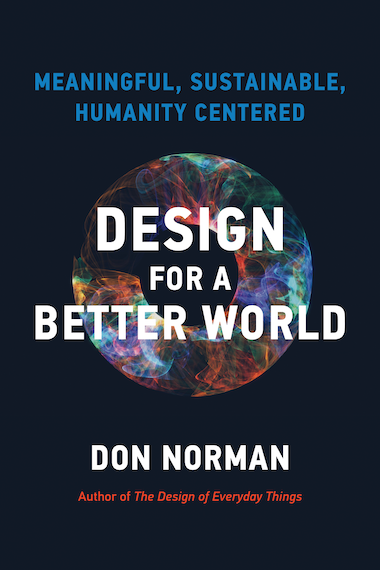
From "Design for a Better World." last paragraph of Chapter 2 (page 13).
Failures? No — Learning Experiences
We scientists (and designers) learn from our failures. In fact, scientists seldom fail. Instead, they say “that didn’t work. Time to try something new.” I prefer never to talk of failure. Instead, I say “that...
Don Norman
Simplicity is in the mind, complexity is in the world.
If you understand something, then even things that are complex become simple. The complexity of the product must match the complexity of the task.
Don Norman in the book "Living with Complexity."
I learn more by being wrong than by being right
When people praise my ideas it is nice to hear, but I don’t learn anything. If people disagree, I learn. If they convince me, I am thankful and I change. If I believe I was...
Don Norman
If you can think of a clever solution in a few hours, assume many others have already done so
If you can think of a clever new concept or solution to an existing problem in a few minutes or hours, then you should recognize that many people all over the world, many who have...
Don Norman
Make it Simple? No! Make it Understandable.
Make it Simple? No! Make it Understandable. When people make things "simple" by minimizing controls, they make it much more difficult to work or to understand.
Simplicity is in the mind, Complexity is in the world. Why? Things you understand are simple.
It is the designer’s job to take complex requirements and make them so understandable and appropriate that they are pronounced “simple.”
Don Norman
The universe is made of stories, not atoms
A quote from the poet Muriel Rukeyzer’s book “The speed of darkness.” Why stories? Because they combine history and context, critical events and results, both good and bad, expected and unexpected all linked through causal...
Don Norman
You are being too logical, I often tell engineers and executives.
“You are being too logical,” I explain. “People are not logical. Logic is artificial. It was invented by mathematicians and philosophers. It is not how people think, which is why it is so difficult for...
Design for people the way they are, not for how you want them to be.
Trapped in a Lufthansa Airline Seat
DesignI flew from Munich to Chicago in a brand new Lufthansa Airbus 340. (the 340-300 model, for those who keep track of such things). Ah, Lufthansa has gone to great lengths to improve their business class fittings. Indeed each seat comes with a 14 page manual. (Oops, 14 pages? That should be warning ...
November 17, 2008
9 minutes read
Design as Practiced
DesignDesign as practiced is considerably different from design as idealized in academic discussions of "good design." Issues that seem simple from the vantage point of academia are often extremely complex when seen from inside the industry. Indeed, the two sides seem hardly to be speaking the same lan...
November 17, 2008
24 minutes read
UI Breakthroughs-2-Physicality
EssaysWe have evolved as physical creatures. We live in a complex, three-dimensional world filled with physical objects. We are analog beings in an artificial world of digital devices, devices that abstract what is powerful and good from the physical world and turn it into information spaces, usually i...
November 17, 2008
6 minutes read
Chapter 16: Coffee Cups in the Cockpit
EssaysCHAPTER 16 OF TURN SIGNALS ARE THE FACIAL EXPRESSION OF AUTOMOBILES 1 Chapter Note: Please do not think that because most of my examples are from aviation that air travel is unsafe or that the...
November 17, 2008
40 minutes read
Engineers and business executives are good at solving problems, but they seldom ask if it is the correct problem.
Human- and humanity-centered designers are trained to address the core, underlying factors, not just the symptoms.
Design must change from being unintentionally destructive to being intentionally constructive
From "Design for a Better World." last paragraph of Chapter 2 (page 13).
Failures? No — Learning Experiences
We scientists (and designers) learn from our failures. In fact, scientists seldom fail. Instead, they say “that didn’t work. Time to try something new.” I prefer never to talk of failure. Instead, I say “that...
Don Norman
Simplicity is in the mind, complexity is in the world.
If you understand something, then even things that are complex become simple. The complexity of the product must match the complexity of the task.
Don Norman in the book "Living with Complexity."
I learn more by being wrong than by being right
When people praise my ideas it is nice to hear, but I don’t learn anything. If people disagree, I learn. If they convince me, I am thankful and I change. If I believe I was...
Don Norman
If you can think of a clever solution in a few hours, assume many others have already done so
If you can think of a clever new concept or solution to an existing problem in a few minutes or hours, then you should recognize that many people all over the world, many who have...
Don Norman
Make it Simple? No! Make it Understandable.
Make it Simple? No! Make it Understandable. When people make things "simple" by minimizing controls, they make it much more difficult to work or to understand.
Simplicity is in the mind, Complexity is in the world. Why? Things you understand are simple.
It is the designer’s job to take complex requirements and make them so understandable and appropriate that they are pronounced “simple.”
Don Norman
The universe is made of stories, not atoms
A quote from the poet Muriel Rukeyzer’s book “The speed of darkness.” Why stories? Because they combine history and context, critical events and results, both good and bad, expected and unexpected all linked through causal...
Don Norman
You are being too logical, I often tell engineers and executives.
“You are being too logical,” I explain. “People are not logical. Logic is artificial. It was invented by mathematicians and philosophers. It is not how people think, which is why it is so difficult for...
Design for people the way they are, not for how you want them to be.
Three Challenges for Design
EssaysThe invisible, ubiquitous computer has arrived, ensnaring almost any conceivable activity within its grasp. This raises wonderful opportunities and challenges to the field of human-computer interaction, for if the computer is everywhere, then everything is within our domain o...
November 17, 2008
6 minutes read
The truth about Google’s so-called “simplicity”
DesignThe truth? It isn't simple. Why does it look simple? Because you can only do one thing from their home page: search. If you want to do one of the many other things Google is able to do, oops, first you have to figure out how to find it, then you have to figure out which of the many offerings to u...
November 17, 2008
3 minutes read
Applying the Behavioral, Cognitive, and Social Sciences to Products
DesignTo do design requires an approximate science, a way of doing quick but effective computations: guidelines useful for synthesis and design. Applied discipolines have different needs than scientific ones. Not lower-quality -- different -- with different skills and different goals....
November 17, 2008
24 minutes read
Where Emotional Design Fails
EssaysI suppose I ought to be pleased. The phrase "Emotional Design" is pervasive, with consumer products of all forms touting the virtues of the emotions. Beauty is contextual. For the objects in our home that we must live with, the context matters. All these new, spectacular designs for television ...
November 17, 2008
5 minutes read
UI Breakthrough-Command Line Interfaces
EssaysWant to know what I think the next UI breakthroughs will be? Here is one: Command line languages. Did you think they were dead? Forever vanguished by graphical user interaces? Think again. Search engines have added command structures, and now these have migrated to the desktop. The new command li...
November 17, 2008
8 minutes read
Chapter 15: It’s a Million to One Chance
EssaysCHAPTER 15 OF TURN SIGNALS ARE THE FACIAL EXPRESSION OF AUTOMOBILES 1 How come some people always know just how they got sick? And how come they always expect me to know how I got...
November 17, 2008
16 minutes read
You may also like books
books